Tuesday, January 1, 2013

Water Kefir Soda - How Cool is that?!

A selection of sodas in second ferment
After a few days of playing with converting dairy kefir grains, designed to feed on milk and create a high probiotic beverage, kefir, into something that would feed on sugar, I decided to get the real thing: water kefir grains. Sadly, my converted dairy kefir grains did die, and I knew there was a high chance of that happening. On the flip side, the water kefir grains are another side of fascinating.

Water Kefir Grains are yet another symbiotic community of bacteria and yeast (SCOBY) that ferment cane (or palm) sugar. They are a complex, not completely understood, SCOBY that appear to be translucent plastic shipping filler, or something like that. Their origins aren't as clear as that of dairy kefir, which are indisputably from the Caucus mountains. It does seem that they originated in Mexico, but have traveled the world afar, and that they are different from a similar looking and acting SCOBY called ginger beer plant.

More importantly, they are awesome to experiment with. You use the water kefir grains to create mildly fizzy, highly nutritious,  beverages through a one or two stage fermenting process. They are one type of natural soda, or sweet fizzy beverage. And the options are absolutely endless for flavoring. If you follow some basic guidelines, they will grow rapidly... so rapidly that you'll be storing them long term within a week or two.

As with dairy kefir, I am not an expert, but i've been reading a ton. Here's the single best site I've found on the Internet in terms of information and presentation: Yemoos Water Kefir Site

Yemoos has an outstanding FAQ on the left navigation bar, and they also have a photo-full how to on their website. So, I'll just talk here about our experiences and lessons learnt. I have continued to add the details of our experiments to a Google doc, including the ingredients we used, the fermentation time, and the outcome. You can find that here.

Water kefir grains

The Basics
 
There are a few ways to make natural soda from water kefir grains. We are using the two-step process.
  • First, you ferment your grains in sugar water with some dried fruit. If your water is not hard and full of minerals, you also want to add some other growth supporting ingredients, like a slice of lemon and baking soda.  You can also add ginger here. The key here is to ensure that you have no chlorine in your water. If you have city water, you must let the chlorine evaporate, and you should add the other ingredients. This is about 6 cup H2O, 1/2 cup sugar, 1/2-1 cup grains, 1 tsp. molasses, 1 slice lemon, 1/8 tsp. baking soda. All put into a jar, sealed or not.
  • Second, we strain the grains after 48 hours and start them in sugar water. They will have grown. Even in our cold house (62-68degF), we are seeing growth of nearly 100% every 48hours. 
  • Then, take the water kefir that you have created in the first step into your soda by mixing it with some new sugar source, or leaving it as it is, bottling it, and letting it sit out and ferment another 24-48 hours.  Then refrigerate. In this second step all of your creativity comes in. You can mix 25-50% fruit juice into the kefir, add other fruits, add spices or herbs, extracts...  
A word of caution: In the second ferment, you have a high risk of over-carbonation and  your container exploding if you aren't careful. The kefir is full of yeasts that feed on the new sugar you've added, creating CO2 and alcohol. Bottling that to get the fizz of soda also pressurized the bottle. If you let it sit out too long, it will eventually explode. Figuring out how long is long enough is part of the experiment, it will depend on your kefir, how much new sugar you've added, the container, the temperature of the room, and probably other things. Experiment by using 24 hours as a baseline.


Our experiments

We've only had our water kefir a few weeks -- and we have plenty to share, so if you want to try some out, just let me know! I have been measuring the growth of the grains. It varies, but we've easily seen it double in 48 hours. We are now preparing to start saving some off, both by drying them and sugar packing them into the freezer.

First Ferments. In our first ferments, we aren't veering too far from the basic recipe, since the SCOBY needs to be kept alive. We have tried various cane sugars: white, brown, turbinado, sucanat. We have added and not added molasses. For the dried fruit in the first ferment, we've added figs, raisins, cranberries, apricots, prunes.  We have done a batch with about 0.5oz of ginger -- wow, that was gingery!

Ingredients... The ingredients molasses, egg shell, baking soda, and lemon are all used to support the growth of the kefir and increase mineral content. We have done batches with and without all of them. We haven't used lemon slices yet, as we don't have fresh lemons about, and instead used a bit of lemon juice. Some websites swear you must use some molasses or unrefined sugar, others say that in the winter, the grains do better with fully refined sugar. Mix it up.

Besides playing with the dried fruit, the traditional ingredients, and the addition of something like ginger, don't mess too much with the first ferment -- well, don't use your only grains to do that. Experiment in the first ferment with extra grains, which are easy to come by with water kefir!  

Growth and progress... The first ferments definitely seem to vary in how quickly they ferment and how much they grow, but I can't say exactly why. We have had one mix seem to get "stuck" and after 48 hours it was still somewhat sweet. With this batch, I through the water away, washed the grains and started again. The grains perked right back up. I had used cranberries - and only cranberries - in that mix. Cranberries usually have some oil on them, so it could have been that, and it could also have been that I used only one dried fruit. Not sure.

In our first ferment we are using 1 cup of grains and, for the most part,  the grains are doubling in quantity every 48 hours. We are putting the extra grains in a sugar solution in the fridge, putting them in compost, drying, freezing, or sharing them.

Temperature and time lessons.... Our house around this time of the year runs from 62 deg F to 68 deg F, with the kitchen reaching 70 deg F during a lot of cooking.  The best way to check your first ferment progress is to watch for bubbles and taste it. You can remove the grains when the taste suits you. Just remember that if you let it ferment too long, you could allow vinegar to move in. Too little and it will be sweet and not too carbonated. As long as you "burp" the first ferment occasionally, you won't have problems with carbon dioxide build up and explosions.

What else? For our first ferment, we are using 2 qt Le Parfait flip top glass jars, the old fashioned canning jars. We bought 3 jars on Ebay from Overstock.com for a very reasonable price and free shipping. The 2 qt is the best size, I think. It makes 3-4 bottles of soda every few days and you don't have to adjust the recipe for the kefir.


Flavourings in the Second Ferment. We are transferring the water kefir from the first ferment into standard flip top beer bottles and adding our flavorings. For each batch of water kefir we make, we get 3-4 bottles of natural soda, depending on what flavorings we choose. We are generally allowing the second ferment 24 hours, but we have tried a range of 20-36 hours. All of these choices effect the taste and texture of your final soda.

In the second ferment, we have combined a number of juices with the kefir, as well as jam and different kinds of sugars. We have done:
  • apple, pomegranate, orange and cherry juice mixes from 25-50% of the solution. We have pineapple, grape, and a few others in waiting. 
  • black raspberry and peach jam at 2Tbsp per 16oz kefir (in Grolsch 16.9oz bottles)
  • vanilla extract
  • Lemon juice (2Tbsp) with 1tsp - 1 Tbsp of sugar (we preferred 1tsp),
  • other sugars: honey and maple at 2Tbsp per 16oz kefir
  • cinnamon stick and cloves
  • fresh ginger
You can also add fresh or frozen fruit, but you also have to get it back out of your bottle. :) Puree works pretty well.

How much sweetener?  How much juice or sweetener to add, combined with how long you ferment, will greatly effect your final drink. I like my drink not very sweet and having a lot of champagne like bubbles. For that, I've found a ratio of 4:1 kefir to juice to work well, with 24 hours of fermentation before refrigeration. If I'm adding sweeteners like sugar, honey, and maple, we first tried 2Tbsp per bottle, but that is too sweet and not bubbly enough for my taste -- instead about 1 tsp seems to do the trick. We've also fermented just the kefir alone. Leaving this closer to 36 hours gives a bubbly, somewhat sour beverage.

We have a running spreadsheet on Google docs that you can review, which lists all of the combinations we've made and what we thought of them. It is found here:

Water Kefir Experiments

Carbonation. I've done a lot of reading on carbonation, looking for the one true easy answer. It's not there. The process seems to have too many variables. It seems safe to do the second ferment in an air tight container for 24 hours. We've done 29 hours with a 50/50 juice solution, and this caused quite the "head" on the soda. I would recommend opening jars facing outward, and even outside, until you know how they'll react.
  • 20 hours in our cooler house, even with 50% juice, wasn't quite fizzy enough. The fizz is small concentrated bubbles like champagne, not big bubbles like common soda. 
  • 29 hours with 50% pomegranate juice in a soda bottle filled probably too full (leaving about 2" headspace) had a ton of carbonation and it didn't die over 24 hours after opening. 
  • We started by filling the jars up past the narrowing of the neck of our Grolsch-style bottles and, mixed with juice, had lots of fizz. We backed down to the base of the neck, and at 24 hours, the fizz is quite mild. I think you have to play with how full they are and how long to leave them, as well as, of course, how much sugar you feed them. 
  • All the mixes that we did with just kefir and sugar/spice, no juice, had only mild effervescence.
I feel like we haven't got this down well enough, so we'll keep playing with the main variables.

Containers. For our first ferment, we are using Le Parfait flip top jars, 2 Litres in size. You can use any 1-2 qt. jar.  Whether you seal it or not, or burp it, during the first ferment will change things slightly, but I don't think significantly. For our second ferment, we are using Grolsch-style flip top bottles for our soda that we purchased at Maryland Homebrew in Columbia, MD. They are about $33 for 12 bottles. We also tried second ferments in plastic bottles. Milk comes in type 2 plastic, and it is safer than soda/juice bottles that are type 1. The plastic bottles will push out so you can feel the carbonation. having said that, so far, we haven't been impressed with the fizz of those made in plastic.  We tried the second ferment in mason jars, again with mixed success. We had fizz, but not the full fizz we got from the flip top bottles.


Wednesday, December 12, 2012

Non-Dairy Kefir Experiments, Part 1 of N


This is dairy kefir grains with apricots

So, back in June, I visited a raw dairy farm in Pennsylvania and picked up some dairy kefir grains. I wrote about kefir back then as experiments into a super food. Since then we grew and doubled are number of kefir grains, split them and gave half to a friend.

Dairy kefir, though, takes regular care and feeding to maintain, and you are constantly producing more kefir. Since we also make our own yogurt, I found myself just keeping the kefir alive by replacing it's milk once a week, rather than drinking most of the kefir product.  The plan was to dry the kefir grains, and they can be stored dry for up to a few years.

But, then I decided to investigate whether we could use our dairy kefir grains to ferment other things. I'd heard that you could ferment coconut water, for example, and make a non-dairy kefir. Could I use the grains I have to do that?

The answer is: kinda. You can usually convert the dairy grains to instead take their food from another source of carbohydrates, but there is a high chance they'll die off and they will inevitably stop growing in other mediums. It's recommended, then, that you only use spare grains for this kind of experimentation.

Once you convert your grains to feed off of sugar, though, you can then make kefir soda pop - a fizzy, fruit-drink high in probiotics.  Many people reported success of keeping their converted grains producing soda for over a year, though they had no growth in grains.

Non-dairy kefir is generally called water kefir, and it is normally produced by an altogether different symbiotic community of bacteria and yeast (SCOBY) than the dairy kefir SCOBY that originates in the Caucus mountains. As best as I can tell, there are at least two distinct SCOBYs that produce water kefir, called by different names, but most commonly sweet water kefir (SKG) and ginger beer plant. The SKG are also called Tomi grains and seem to originate in Mexico.

To grow a SCOBY with a sugar-water solution, you need to use a real water kefir SCOBY. I have ordered some of that, so we can see what it is like.. but in the meantime, I went about and converted some dairy grains.

I won't try to pass on the science, as I don't fully understand it and it's documented on the internet. This site is the most authoritative, but also overwhelming, site on kefir on the Internet, by all accounts: Dom's Kefir Website. Another website that has a very detailed FAQ and seems more accessible is Yemoos Nourishing Cultures.  Searches on "water kefir", "converting dairy kefir to water kefir", "kefir soda pop", etc. will all yield lots of results.

 Instead, here's the nutshell of what I've learnt, specifically about creating water kefir from dairy grains.

  • It generally takes several days to convert the grains to eat non-dairy sugars, many sites citing up to 5 days. Mine started fermenting in about 48 hours. 
  • Once converted, it is difficult to convert them back to dairy products. They may die off, and they most certainly won't continue to grow. 
  • The base solution for water kefir contains: non-chlorinated water (spring or hard well water is recommended), some dry fruit, some sugar (about 10-15% solution). Some recommend adding egg shells, baking soda, and if using refined sugar, a bit of molasses. 
  • You need to use the most pure water you can, spring or well water. If you only have city water, you can let the chlorine evaporate by setting the water out overnight. At a minimum, you need to get rid of the cholorine or it will kill off your SCOBY.  Since we aren't on city water, we haven't researched this fully. And hard water is recommended, which is why they add egg shells to the mix. 
  • Varying the types of fruits and sugar you use will vary the taste of your water kefir. 
  • After it has fermented, you strain out the grains and other ingredients and restart the grains in new sugar water. Put the water kefir in the fridge, or... 
  • many people then take the fermented base and add in in a 50/50 solution with some sort of fruit juice for a second ferment. The second fermentation will feed the bacteria and yeast that are in the water kefir solution with a whole new set of sugars. This is generally what is called soda pop kefir.
  • Some people just use one fermentation and start their based with fruit juice, however, this can discolour the grains. SKG also doesn't seem to like to feed on fruit juice, and so the single fermentation is usually done only when using converted grains. 
  • You can feed your converted grains any kind of carbohydrates - various dried fruits, different sugars, to include honey, coconut water, and others. You can't use Stevia, as it doesn't have carbohydrates to feed on.  Most sites recommend unprocessed sugars like Turbinado, Rapadura, etc. 
  • Converted grains produce a slightly more alcoholic drink than water kefir from SKG. Sites seem to provide numbers of 1-2% for converted grains and 0.5-1% for SKG. However, the alcohol content is highly dependent on the type of sugars and the length of fermentation. 
  • You can ferment water kefir either air tight, loosely covered, or opened, and this also effects the end product. 
  • Once the solution is put in the fridge, the fermentation slows way down and you can control the level of fizz that way. The Art of Fermentation recommends using some solution in type 2 (so it doesn't leach chemicals) old soda bottles so that you can feel the level of fermentation with your hands. Everything else says don't fill about the 3/4 mark in the tight jar, but I think this also assumes that you still monitor things and put in the fridge at exactly the right moment. 
  • As far as timing goes, both for taste and for CO2 issues, they say to ferment the grains for 24-28 hours, then do the second ferment at room temperature for 12-48 hours. After this time, you need to put them in the fridge because of the CO2 build up. Also, the ambient temperature of the room really matters, so in Summer you need to exercise more caution.  
Comparing the kefir alone fermenting with a mix of juice and kefir

Here's our first experiments:

  • I took our dairy grains and washed them several times. Then added them to water straight from our well, to get the most minerals possible, with sugar-in-the-raw, a little molasses, dried apricots, and an egg shell.  I put this in a mason jar, filling only 3/4 full, and tightly sealed the jar. 
  • It took about 48 hours to get distinct bubbles rising, and after 72 hours we divided the solution. We put some in the fridge. It was only mildly fizzy, but had a wonderful taste. We took some solution and left it to sit by itself, and we created a third solution of 50/50 with apple juice. 
  • The base solution has continued to ferment but slowly. 
  • The 50/50 solution is fermenting rapidly and has a strong show of bubbles after 24 hours. Tasting it after 24 hours, it still has strong apple juice flavour, but it is definitely not as sweet. 
  • We have started a second base solution using sucanat (a dark unprocessed sugar), fig, and cranberries. This solution is really quite dark and when we started fermenting it, it was sickeningly sweet tasting.  It began fermenting gently after about 24 hours. 
  • My biggest concern right now is controlling the CO2. I don't have a strong understanding of that process or controls, and there a good risks associated with explosion of glass and sugar in the kitchen! And if you keep releasing the CO2, as I've done on some of these, then eventually your fermenting dies down and you loses the bubbles. One good, but kind of expensive, option seems to be flip-top soda/beer bottles for the second ferment and storage. Still, there doesn't seem to be really good information about how to calculate the liquid levels to avoid problems, and I now suspect that's because it's pretty complicated. 
  • The consensus I found in the fermentation Real Food world was to fill the jar 3/4 full for the first ferment with the grains, then when you put them in a soda jar, to leave 1" of headspace.  Their consensus seemed to be that less headspace was more dangerous, but I had home brewers tell me otherwise. Another thing they recommended it to put the fermenting bottles in a place that if they do explode, it's contained. :)
  • In my first batches, I kept burping them because I was worried about the CO2. They did have a nice flavour to them, fermented, sweet but not too sweet. But, with all my opening and closing, they definitely went flat. The other thing was that I took one jar that had the mason lid bulging and put it in the fridge, but 12 hours later it was flat. I am assuming that the jar wasn't quite airtight - not sure. 
Our second batch used sucanat - an unprocessed sugar - that left the grains dark brown!
     
I am tracking our experiments and their outcomes in a dynamic Google doc spreadsheet that can be found here.  This says what sugars, fruits, timing, etc. we used, as well as tasting outcomes.
Our Sugary Kefir Grains (SKG) have just arrived. They were $6.50 on Ebay.  They are totally bizarre looking. nothing like dairy kefir! so, we'll see how that goes....


Thursday, October 11, 2012

When Life Gives you Green Tomatoes....


Ripen them. 

Last year, a friend of mine gave me all her remaining green tomatoes as the warm Summer nights came to a close and the promise of vine-ripened heirloom tomatoes disappeared. Green tomatoes have the tartness of tomatillos, not to mention the colour, so I turned them into a verde sauce. Cutting them into huge chunks and stewing them with onions, garlic, and hot peppers. Then froze it. This makes for a wonderful cheese (or kale/greens) enchiladas verde later in the winter.

But this year, I decided to experiment with ripening. I took each of her tomatoes, wrapped it in newsprint and put them all in a cardboard box. In addition to her array of huge heirlooms, I had many green paste tomatoes of my own from my ever failing veggie garden. Those i just tossed in a brown paper bag and rolled closed. Over the next two weeks, her tomatoes all softened and turned a lovely shade of red. In turn, I tossed them into the freezer just as they were.

turning unwanted unripened fruit into red gold
This past few days, I grabbed all of the tomatoes from the freezer and tossed them into a pot with some oregano and basil from the garden. Let that stew for many hours so it would thicken (to about half of the original water content). Then run the whole thing through the foodmill real quick to weed out the seeds. Tada. Marina sauce that started with her unwanted green tomatoes. That got popped into jars and canned in the pressure canner. Now we have two quarts of sauce for the winter. Alas, only two quarts. It really takes a lot of tomatoes to make tomato sauce. :(

With a bit of sauce left over, I made my first bloody mary. quite excellent.  The tomatoes had gone from tart to purely tomato. Really pretty amazing.

Simply slice the paste tomatoes and add to the rack
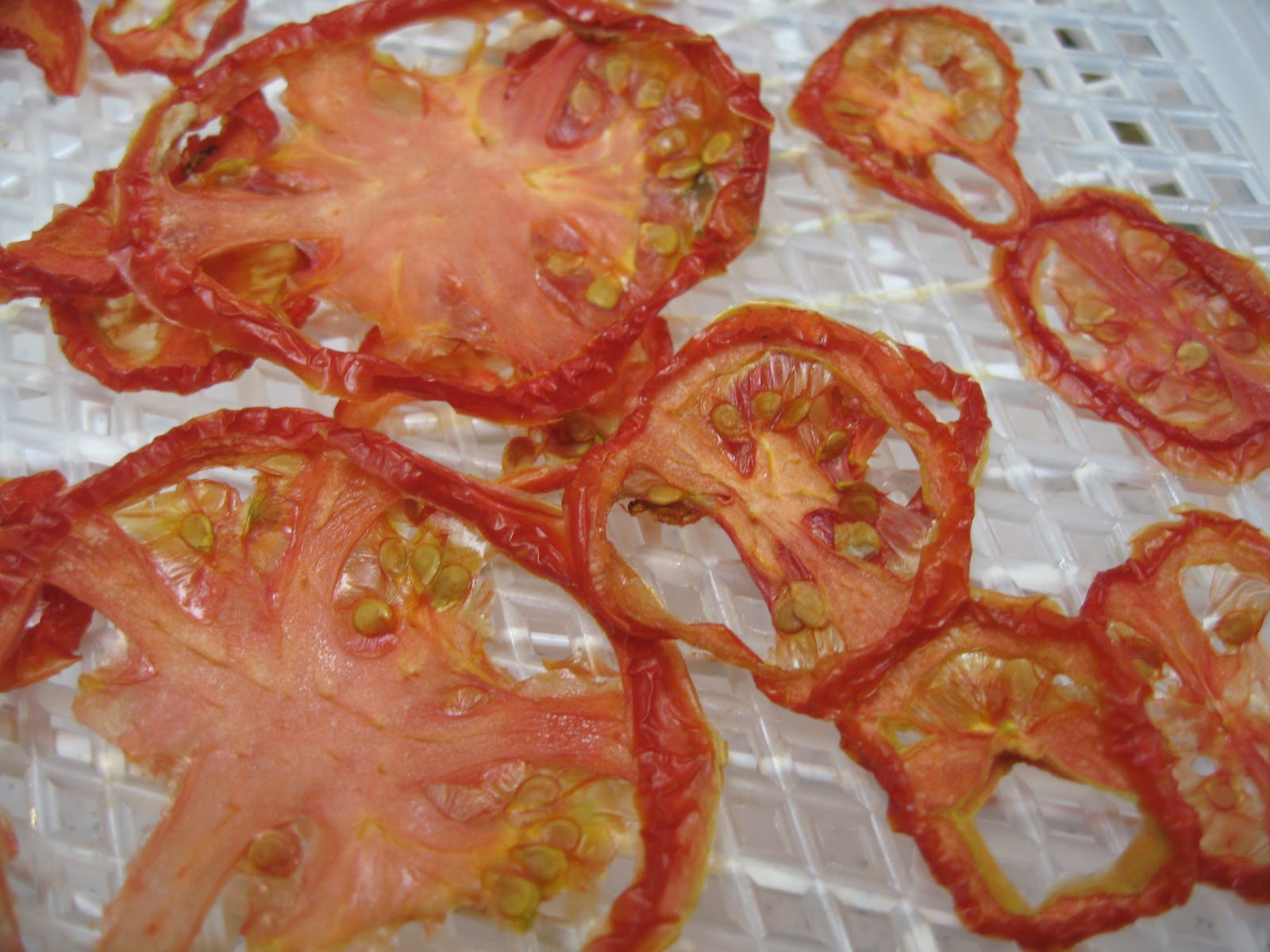
With my remaining paste (plum shaped) tomatoes, I sliced them and threw them in the dryer. Six hours later, I have some very potent dried tomatoes.

several hours later... "sundried" tomatoes.
So, don't toss your green tomatoes or let them rot on the vine. You can just toss them in the freezer (green or ripened) and sort it out later.

Now as we move out of the easy gardening season, I am once again looking forward to the winter CSA with Everblossom Farms in Pa.


Wednesday, August 1, 2012

Cautious Optimism in the Garden

The acorn squash starts white (rear)
Last year I told the story of my endless struggle to grow vegetables in the midst of the woods. Others might think the wiser of it, but every year I give it a go. Last Spring, I bought and then shoveled nine yards (=a lot) of compost to create a raised bed which I enclosed in a 6' high, 10'x10' dog kennel to keep out deer. But, the compost was really not composted completely and was horrible. It killed all my plants.

This year, the raised compost bed is better. It hasn't outright killed anything. The tomatoes were quite leggy though and don't have much fruit, and they don't look great. I did get a decent set of beans from it, chard continues to grow in it, and there is a single tiny watermelon in development.

But the exciting news for me is in the newest bed. Having failed with the compost, I hauled the sandbox I'd made for my son when he was a toddler across the property and adjacent to the dog kennel. I filled it with commercial soil, compost, humus. I planted garlic in November and left it over winter. In the Spring, I put in some beans, peas, and various odd seeds.  So, my garlic did great. At least by my standards, and I wrote about that in June.

Now the exciting news is winter squash. Two winter squash plants -- an acorn squash and a buternut squash -- are taking over the property, running 10' each in any direction. I've never had success with any squash before and I've always been told winter squash is the hardest. But, low and behold, I have squash growing ! There are three butternuts on the vines, and acorns continue to pile up.. there must be ten or more of them now. I'd love to get more butternut, but they seem to have done their thing.

Now, we wait. I can't harvest them for another 8 weeks or so. There is soooo much that can go wrong before then. Deer can come through and eat the entire thing overnight -- that has happened to me before. Bugs are another huge challenge, though I didn't see any squash bug eggs on the leaves. And then there is just rot and other enemies of success.

Keep your fingers crossed !
The immature butternut starts out with green and white stripes - this is about 6" long
Here the white has turned yellow over about a week... it should then, I think, go dark green


Tuesday, July 10, 2012

Science Adventures in a Super Food


After 26 hours of fermenting at 78degF - curdy!
Last month I took a trip to a raw dairy farm in Pennsylvania with a few friends and found myself on a whole new adventure. I'm not much of a raw milk advocate, largely because I don't really understand the whys and hows of pasteurization. But more importantly, because I live in Maryland. The sale of raw milk is illegal here. But the opportunity to buy raw milk from a highly reputable farm couldn't be passed up. I'm not quite sure what we expected a raw dairy farm to be like. It was a small store, probably 30'x8' in size, packed with, obviously, raw milk... cow milk, goat milk... butter... and other classically sustainability-oriented products like pastured meat and local honey. Manning the store was a young boy, probably not twelve years of age. We gathered the bounty of illicit goods and filled our cooler full. Raw dairy. Ooh.

Then my friend said, "They sell kefir. I've always wanted to try that. Do you want to share some?" I'd heard of kefir, but really had no knowledge of what it really was. I thought it was Indian yogurt (wrong). What the heck, I thought, after all, I'm living out of the box here! Our hopes were dashed in seconds though, when the boy said they had no kefir available.

"We do have kefir grains, though, and you can make your own", interjected the boy's much older brother who had joined the room. Make it? Yes, he told us, it's sort of like making yogurt or soft cheese. The idea of trying kefir, this unfamiliar super food, was mildly interesting, but the idea of making kefir, now that was down right intriguing! Right down my alley. A nod, a shrug, and a few minutes later we were proud owners of a bottle of kefir grains. Now we just had to figure out what they heck that meant.
This is what the grains look like... kefir in the pot below

We came home with a small milk bottle of milk with some thingies in it and a set of instructions. Pretty straightforward: put thingies (more formally, grains) in crock, cover with milk, let sit 24 hours, strain out thingies. The liquid left is kefir. Best served as a smoothie made with frozen berries.

All well and good, then the instructions continue that the grains will grow over time. The grains need to be fed, essentially, and can be slowed down in the fridge, but they can be completely dried out and stored at room temperature for years.

So, what in the world were these grains? Not clear.  I did some research. I found kefir to be totally fascinating. Here's some cool things I learnt in the last few weeks:
  • it is really funky stuff.. it looks weird... it acts weird.. tastes a bit weird.. and is very cool... and, apparently, is a super food. 
  • kefir grains have nothing to do with plant material. The grains are globules of bacteria. Healthy bacteria that has powerful properties (probiotics) to support healthy digestive systems. 
  • These grains look like jelly globs. The globs range from pea size to walnut size. We're measuring their growth for a science project. 
  • kefir is actually a fermented dairy product with less than 1% alcohol content ....
  • you can use any kind of dairy, and now that we quickly ran out of our raw whole cows milk, we're trying pastured pasteurized whole milk from South Mountain Creamery...
  • kefir tastes like a very yeasty plain yogurt, but it's more unattractive to look at...it is definitely a liquid, with curded flakes that separate out... and I should say, our kefir because... 
  • kefir originates from the Caucuses and is passed along through the growth of grains...
  • attempts to reproduce kefir in a lab setting have failed, and it is unclear exactly what all the bacteria in the grains are.... 
  • as I understand it, the grains will also change based on the bacteria in the environment they are in, so, it seems, your kefir is somehow uniquely your own... 
  • kefir made commercially is not really kefir, but a dairy product made with major bacteria strains from kefir grains... 
  • same is true of things called kefir culture... they are a few of the extracted bacteria and can't be used to grow kefir grains over time...
  • when your kefir grows enough, you can split it and share it, but you have to keep feeding it by replacing the milk it sits in weekly... like sourdough... 
  • it takes a little bit of work, a few minutes a week, and some forethought, but is pretty easy to manage...
  • when you puree kefir with frozen blueberries and sugar it tastes just like a yogurt smoothie. 

There was a great video on fermented food by Sandor Katz, author of The Art of Fermentation,... there is a section on kefir, but the whole thing is fascinating.

http://www.youtube.com/watch?v=kmDtbvRZnw4

My son also found interesting YouTube videos on making kefir with coconut water, instead of dairy... to make fermented beverages.. called water kefir.... 

http://www.youtube.com/watch?v=d-WGJG4A1mg


Saturday, June 9, 2012

Spring Sprang and Here We Go Again

Softneck garlic - huge bulbs!
So things were pretty quiet during the winter. It was mild, and we had a very successful second year with our Winter CSA subscription at Everblossom Farm. There is something extra special about being able to get fresh, locally grown produce through the winter.

Now I am back, and google has a new look to their blogging interface. Not sure I like it, not sure I like any of the austerity measures they've put into their interfaces. Not sure I get it. But, in any case, so it is. Free is free.

We've really just started the local produce season, but it is off to an auspicious start for me. Last Fall I dragged the 8'x8' raised sandbox I made for my son when he was little out into the front yard, next to the fenced in raised bed of last season, and filled it with various soils. I can't recall whether I posted anything about that. One would definitely wonder why. I haven't had a successful season of gardening just about any food of my own in some 10+ years of trying. I mean, I can grow oregano in the yard, and mint.. neither of which, in truth, can be killed by the strongest of wills... but actual Summer veggies have failed or done poorly. So, I tried again.

This time I planted softneck garlic in the raised box. I planted them in early November, I think, or late October. I decided to try softneck because they will last longer than hardneck garlic. Indeed, based on what I've read, I don't understand why most people plant hardneck garlic. It starts sprouting or softening within a few months and even the most dedicated of garlic eaters would have trouble finishing 30-50 heads of garlic before it goes. In any case, I went with softneck. Last year I planted hardneck, and I did get garlic. I posted about that. I was thrilled. My largest bulb was the size of a large walnut! But hey, it was garlic. And, honestly, even though it was hardneck, stored in the dark basement it lasted me, without softening/sprouting issues, through to mid-winter.

A few weeks ago, some of the garlic fell over. I thought it was the storms. Not quite sure what to do. I thought you harvested garlic here in late June. Thankfully, I decided a few days later to do some googling on the subject. With softneck, when the garlic falls over, you better pull it. So, we did. And we had a few bulbs that were large walnut size, but mostly we had big fat bulbs!! big! fat ! bulbs! i'm totally excited.

And, on top of that, I also through beet seeds in that bed early spring. I have never successfully grown any actual beet, though I have gotten some greens. When I pulled the garlic, I also pulled five large beets from the ground. Woo-hoo!
my beets.. not huge, but not bad!

AND, there are peas.. which probably need to be harvested today...

in the meantime, I put some tomato plants into the raised compost bed from last year. Last year the not-done compost that I paid a fortune for killed off all of my plants. like seriously sucked them of their life blood and killed them. I am hoping that a year on the compost is more giving. We'll see. I have been growing chard in it over the spring, and that has been producing, but I think chard is pretty easy to grow.

So, I'm like a real farmer.

And, on top of that, I joined the Love Dove Farms CSA. I profiled John Dove last spring and I am thrilled to support him as he tries to convert the family farm, or a part of it, into an organic produce farm. There was a great article about him and the farm in last month's Howard magazine. Take a Look. I'll let you know how the CSA goes.

Friday, February 3, 2012

Making your own vanilla extract -- how cool is that?!

Vanilla extract to be
A friend gave me homemade vanilla extract this Christmas. I thought that was just the coolest gift. I'd never really thought about how extract was made, much less realized that you could make it as a unique simple gift. Loved, loved, loved it. So of course, I had to set out to make some for others. I did a bit of research and it turns out my friend bought her supplies from a high quality vanilla bean supplier: Beanilla.com.

Taking a look at their website, I found not only an array of different origins of vanilla beans, but also organic beans. There were certified organic beans from Mexico and beans grown organically, according to the site, but not certified from India. In addition, they had the beans that you've heard of before -- bourbon and madagascar vanilla -- as well as a handful of others. Reviewers cited their large plump beans, and I decided it was worth a shot. They also sell a variety of other vanilla products, as well as the jars you need for extract.


There are a number of very informative posts on making vanilla extract on the Internet, and I'm certainly not an expert. One of the best I read is found here.  The important thing is that vanilla can age over years, like wine, with a little bit of care. During the initial extract, you are shaking the bottle regularly. Once it's extracted enough to start using it --about 4-5 weeks -- then you just top off the vodka (or rum) each time you use it.  About 6 months in, it is recommended that you remove the beans and strain the seeds. You re-bottle the extract and let it age, or use it. A totally wonderful "reuse" product, you can then take the beans, dry them, and store them with sugar to create vanilla sugar. How's that for fully using a product??

Making the extract was pretty straight forward. We cut open the beans, used a knife to scrape out the seeds. Filled the bottles with vodka, and capped them.
That's a pairing knife but these are big SOFT beans
you can barely see the hundreds of little seeds in there

Add vodka

A few days later we used one of our remaining beans to make Jamie Olver's Proper English Custard. My first attempt at that, having made Bird's Eye custard quite a lot in my younger days. This was a lot more technically complicated, but O-M-G... unbelievably delicious. Definitely the best custard I've ever eaten... or so I recall. :)

Sunday, November 27, 2011

The Real Winter Squash: Blue Hubbard

Blue Hubbard Squash in pieces
 Our first Winter CSA pick up included potatoes, radishes, collards, carrots, fennel, bok choy, leeks, cilantro, and what I had been waiting nearly a year for... a Blue Hubbard squash. I forgot to photograph it whole, so here it is on the left, split in two and another slice taken from the top. These amazingly ugly squashes are unbelievably tasty. Last year I used them for pie and equally delicious soup. In Germany in the winter we would have lots of kerbis (meaning gourd) soups and other dishes through the Fall. Kerbis oil and seeds are used as condiments. The one thing you'll never see is kerbis pie. Funny. They just don't eat the same type of desserts as we do.


Roast until soft in oven

What they are missing !


You cook Blue Hubbard like Butternut or other winter squashes. Cut them in chunks, scrape out the seeds, and roast the pieces in the oven at 350F for 45 minutes or so. They'll be totally soft and you scrape the skin off to mash the remains. 

Puree and add ingredients
 Once you have something like this, it can be pureed with spices, cream, and eggs for pie. Or changed into some other savory dish.


Did you know that most commercial pumpkin for pumpkin pie - the kind you buy in a can - is butternut squash? It's interesting to me that you'll find quite a lot of people who say they don't like squash, or particularly butternut squash, but will eat it as pie.  Of course, the sugar and cream probably influences that.


wonderful Blue Hubbard Squash pie
 But Butternut squash soup tastes nothing quite like Blue Hubbard. I'm hoping for at least one more squash this season.

Which isn't to say that Butternut isn't great for soups. I have two wonderful recipes for it. One combines the squash with ginger for a smooth soup that balances those wonderful flavors. The other keeps chunks of squash in with pork, creating a chunky Fall stew for a tasty pairing.


One Blue Hubbard is enough for two deep dish pies and several small ramekins. Looks good, eh?


Dried squash seeds
My great find this year is dried seeds. Of course, I'm constantly looking for ways to use my new dehydrator. I dried apples and raw almonds in the last few weeks. The almonds are soaked overnight and then dried for 24 hours. This keeps them a bloated, crispy feel that's hard to describe and absolutely addictive.


I figured the seeds might well work the same. I soaked them for about 6 hours, dried for about 12 hours. I sprinkled on some cinnamon at the start, too. The result were puffy seeds with a paper-like outer coating that was similar to rice paper in consistency.


The kernel is a green yummy morsel
The outer white part is fibrous and a bit chewy, but the seed on the inside has a wonderful delicate taste of pumpkin.

In Germany I would buy raw kerbis seeds for my yogurt. These were dark green seeds, and I could never quite make out really where they came from. I've never seen a green squash seed. But taste testing our new dried seeds, my son and I realized there was a separate kernel inside the white coating which was giving the fabulous flavor. Sure enough, with some effort you can pull off the white coating to reveal a green seed. It's a bit difficult, and you can see my finger nail marks on the green seed here, but hey, you get the idea. I do wonder how they strip off the outer coating commercially now. Hmm....


Tuesday, November 15, 2011

Better Life through Canning

So, this past weekend I got invited to a local canning swap and trade party. I know it sounds a bit weird or, well, domestic maybe, boring to some, old to others,.... dated maybe... but, this is the kind of gathering I've been wanting to join for some years. The idea is that you can things during the harvest season, either by yourself or in canning parties, and then bring a bunch of canned goods for others to taste. At the end of the event, all the unopened cans are laid out and folks fill their baskets with roughly what the number they brought in. There were six of us on Sunday. I took ten jars and came back with ten jars, only two of which were mine. Not bad.

The reason these types of trades are so intriguing to me is, aside from the whole aspect of socializing with others who do arcane things, the sheer variety you get without being overwhelmed. If you are canning alone in your kitchen, just you and your pot of boiling water (I'm cheap and don't own a pressure canner), even with small batch canning, you'll end up with 4-8 jars of whatever you make. Let's say eight. So if you make six half pints Apple Ginger Chutney, that's actually a lot of chutney to consume over the year. Of course, you can gift these things, and sometimes I do. But, let's be honest, the vast majority of folks have no appreciation of the amount of work that went into making that unusual chutney. Some will avoid opening it, instead waiting for the right special occasion where chutney calls out to them and they have all the right guests and all the right china on the table. Or, in all likelihood, they have no idea how one would eat chutney; isn't that some weird foreign food? So I'm leery of gifting unusual recipes even though I might just love to try a jar myself.

I'm quite generous, I think, with my canned goods and other things I make, as long as folks will appreciate them. I can see my little Golum coming out, though, when I recognize that's not the case. This year life interrupted, and I was unable to get many sour cherries. The result: two pints of sour cherry jam. Nothing else. No frozen cherries. Nothing. My sour cherry jam rocks. And I know it's totally sad and selfish, but when folks who like Smuckers just as much are digging in, I have to hold down my inside voice... "it's mine, my precious".... and I might just be guilty of sliding that one to the back of the fridge and bringing my less-than-favorites to the front. The sins of a canner.

On the other hand, my hot pepper jellies are usually a big hit, particularly with folks who haven't paired them with cream cheese. I had so many request for jars last year that I made double this year to give to whomever wants them. Pepper jelly is so unique and one of the coolest ways to make a quick Real Food appetizer, I'm delighted that folks like it and glad to share.

In any case, when you make unusual recipes, you are often, well, I am often, stuck then with jars of unusual recipes. Luckily, last year my son absolutely loved the spiced blueberry cherry preserves in his yogurt. These were Fall spices, like cinnamon and nutmeg stewed into blueberries and sour cherries. It tasted good, I though, but four quarts good? Not for me. It took the year, but we did eat them all. Still, this year I went back to tried and true things.  Which means, when I got invited to this party to share, since I wasn't quite expecting it, I wasn't quite prepared either.

I brought garlic dill pickles, apple sauce, and pepper jelly. The first two are things most everyone makes. Most everyone makes a lot of. Not too exciting to swap. I also had one jar of lemon basil jelly, which was interesting.  The great thing is that these kind of parties usually involve generous people who are willing to try other folks stuff and appreciate the work involved, so I did pretty well.

For my part, I got to take a home a jar of Blackberry Lime jam, pumpkin butter, cranberry jam, pickled watermelon rind, a different pepper jelly, apple chutney, and bay leaf infused plum jam. Plus, I got a bit of pineapple sage butter. We tasted various breads that others made, and an apple cobbler. Not too shabby. And the group was all knitters, so we sat around, talked, and did that too...Bonus!

Saturday, November 5, 2011

Crushing Grapes at Serpent Ridge Winery

 It's taken me a few more weeks than I had hoped to get these photos up from my recent volunteer day with Serpent Ridge Winery in Westminster, Md. Life intervenes.

For more than a year now, I've been watching the winery's calls for volunteers to help crush, press, pick, or bottle, hoping to match up a day when I was free and they needed help. Invariably things didn't work out. Turns out, a lot of people like to volunteer at the winery and you only need so much help at a time. But finally, in mid-November I got my chance.

My friend, Maureen, and I joined six other volunteers for a morning of crushing cabernet sauvignon grapes that the winery had just received from another farm in Maryland.  After a morning of lifting, pouring, and cleaning, we were rewarded with a wonderful lunch and a discount on our wine purchase. It's a great experience to be involved in, and hopefully we'll get the chance to do other parts of the process next year.

Maureen weighs a box of grapes - they ranged from 14-30+ lbs

This is what the grapes look like before crushing...
The crusher before it's in place...


And after crushing....


Create a work line to pass along the grapes
They try to quickly pull junk out of the grapes before they get crushed
And, the bins get cleaned after their grapes are dumped...
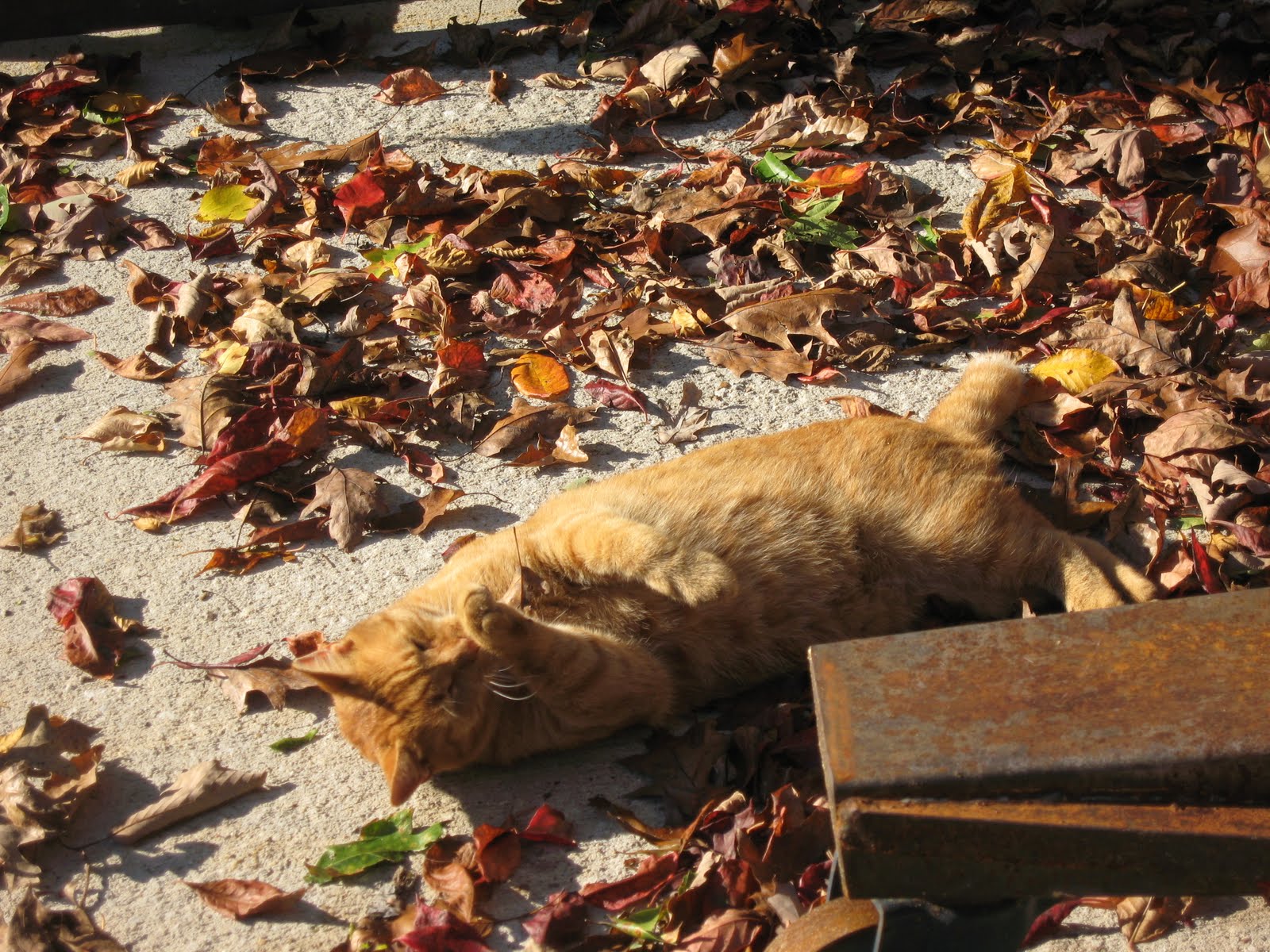
This is the winery cat, Zork, named after the wine cap

Saturday, October 15, 2011

Organic Local Apples

A new source for Organic Apples
Farmer, farmer put away your DDT now, 
I'll take spots on my apples, 
Leave me the birds and the bees... 
Pleeeaaassseeee..

I love that song. The original. The remakes. Of course, we're not using DDT anymore, but there are plenty of other "proven safe" but make you (or me) nervous chemicals being sprayed on our agriculture still. Living in the mid-Atlantic, the problem I've found is that if you want local, as I generally prefer, you're going to have a tough time finding organic fruits. Sure, plenty of people have an apple or pear tree, or two, growing in their backyard. They don't touch it and it produces fine, if not beautiful, organic fruit. There is an organic blueberry farm not too farm from here (in Olney, Md), but blueberries are among the easiest fruit to grow organically. Tree fruit is tough.

So, I was delighted when a friend mentioned a source for organic apples out of Pennsylvania: Oyler's Organic Farms.  And I was thrilled when I saw the prices. Where the organic blueberry prices are several times those at the average pick-your-own farm (but chemical free), the organic apples were just plain normal grocery store prices. They sell #1 and #2 apples, by the 1/2 and full bushel. These aren't pick-your-own. You place and order, then drive to pick them up.

Since I had no idea what to expect, I went with a full bushel of #1 Ida Reds in a box. I figured the extra costs for #1 apples and also for the box, over a bag, might be worth it. The apples were $42 for 42 lbs! That's unbeatable in my book. Friends told me that they still used the #2 apples as eating apples, but that you'd have to cut pieces out here and there. I am processing a lot of my apples into sauce or freezing them for winter desserts, so you'd think I wouldn't mind cutting. I probably don't, but not cutting is even easier. And it would tell me what to expect.

My box of #1 Ida Reds

I was thrilled with these apples. They were indeed spots. All of them had some scab looking thing, but not a single one had an issue under the surface. Not one. I peeled and sliced about 30 apples (with the ever-helpful Pampered Chef tool) and found absolutely no problems. Another large bunch were sauced whole, but cored, and again, no issues.  The last big bunch went to making Fresh Apple salsa that I mentioned in my last post, for freezing. And, a handful went to the fridge.
All the apples had some blemishes like this
And all the apples looked great inside - like this !


There's still some time left for apple picking in the season. There's no doubt this is the best way for me to go. I'm looking forward to some York apples, which are supposedly much more sour, in the next few weeks. Yum yum.

Friday, October 7, 2011

A Variety of Thoughts for Fall

Hot pepper and lemon basil jellies
Well, this Summer turned out to be quite a trip, and unfortunately, the first thing to go by the wayside was writing and food sourcing. I have no idea whether my posts were missed, but here I am again, and hopefully will get back to being a bit more regular. Sadly, we've passed the height of fresh food from local sources, so we'll see how it goes. Since so much time has passed, instead of a cohesive topic, I have a bunch of early Fall subjects to touch upon today. Hopefully some of it will be helpful.

If you find yourself thinking about the long winter ahead without fresh local food, a winter CSA might be for you. My local buying group is going in together again with subscriptions at Everblossom Farm, outside of Gettysburg, PA. With pick ups only every other week and a group of families to share the driving, you can have a wide range of produce throughout the five months you would normally trek to the grocery store and get straight from Mexico or elsewhere. If you're in Southern Carroll County, you might even be able to join our group. Check out my earlier posts on Everblossom and our CSA experience last year.

My only worry about the CSA this year is that the weather here in the mid-Atlantic has been beyond dreadful this year. Today is our second day of clear blue sky in literally many weeks. The rainfall for August and September was ridiculously high and washed out a lot of farmer's Fall plantings.  Many farmers were left with poor growth and failed seedlings.  Tom of Nev-R-Dun farm in Westminster even failed to show a few weeks at the farmer's market this last month, as his plants had been hit so hard.

My own adventures didn't fair well either. I wrote earlier about my big project to create a fenced garden. It was a raised bed filled with about 7 yards of compost from D.R. Snell Nursery in Mt. Airy. Unfortunately, their compost, though extremely expensive ($27/yard+delivery), was really not good. It had not fully composted, had huge chunks of cloth, wood, and rocks in it. But most importantly, it's nutrient levels were way off. It is supposed to be manure and leaf litter, but it was very low in nitrogen, and it all but killed off my tomatoes. Everything except cucumbers were a complete failure this year.  I can only hope that next year the ground will be fully composted and ready for seeds.

The other thing we do about this year is plan for our winter meat orders. Chickens are a big one. You can't get pastured chickens locally from about November until around April. So, my group always puts in big orders to freeze through the winter. Unfortunately, this Summer was a kicker for local chicken farmers. Predation took hundreds of birds. Our usual sources, Sattva Place, Akeys Farm, and Jehovah Jirah can not fulfill our usual big order (~20 birds). So, that's incredibly disappointing. If you know another good source in the area, please add it to the comments section. We also buy our turkeys about this time of year, but Copper Penny Farm also suffered huge losses due to heat and predators this Summer. It's unclear whether they will be offering any birds for Thanksgiving. Bummer, man.

My usual source for beef, Ruth Ann's Garden Style Beef, is doing their winter orders earlier this year.  Her pick up will be in November this year, and orders are due very soon. Other farmers may have later order times, but I haven't seen any specifics.

It's apple picking time ! I've been asked by a number of different people about preserving apples recently, specifically about freezing apples. Yes, apples freeze extremely well. I do a few things with them. I'll slice about 6 apples, toss them in sugar (for preservative), and freeze them in a ziploc, removing as much air as I can. This is exactly what you need for an apple pie. You can use the apples frozen, and some people even freeze the apple with the bag sitting in a pie tin so they have the exact shape they need. You can also just dice the apples, skin on or off and freeze them like that. That's great for apple toppings and crumbles. I also make a lot of sauce, but my absolute favorite these days is apple ginger salsa, which freezes fabulously.

I think I got this recipe from allrecipes.com last year, but am not sure... in any case, they have one listed there... they call it Fresh Apple Salsa Recipe. Make a bunch. Freeze it in pint or half pint jars. It goes fast.  I like it best with yellow corn tortillas.

Ingredients

  • 2 tart apples, cored and cubed
  • 4 tablespoons lime juice
  • 1 fresh jalapeno pepper, seeded and sliced
  • 1 fresh Anaheim chile, seeded and sliced
  • 1/2 medium onion, finely chopped
  • 2 tablespoons coarsely chopped fresh cilantro
  • 1/2 cup chopped walnuts, lightly toasted
  • 2 tablespoons fresh ginger, peeled and thinly sliced
  • 1/4 teaspoon salt

Directions

  1. In a large bowl, stir together apples and lime juice. Stir in jalapeno and Anaheim chile slices. Stir in onion, cilantro, walnuts, ginger, and salt. Mix thoroughly.
 
The other thing to do right now is deal with herbs you have in the deck or garden. Most of them can be cut and dried inside - hung in the basement is perfect. Oregano is a perennial. Just cut a bunch of it's stems off, dry them, and ta-da! you have oregano for the winter. Mint is the same. I also usually dig up a bit of mint, pot it, and bring it inside for the winter.  If you have lemon verbena for it's fabulous herbal tea or otherwise, you can actually bring that plant in for the winter. It is a tender perennial, so if you don't, you'll have to buy another next year. Instead, dig it up, shake off all the outside soil. Cut off almost all of the growth - and dry that in your basement for winter tea ! -- so that it doesn't stress out. Re-pot and keep in a sunny location. It will completely regrow during the winter and you can use it fresh. 
I also grew lemon basil this year and didn't use it. So, last week I was contemplating what to do.Turns out, it makes awesome jelly. With about 2-3 cups of lemon basil, you can create a lemon tea, add sugar and pectin. I doubt you need to use a hot bath canning process, but I did. The result is a lemon drop flavored jelly - delicious ! As is always the case with jams/jellies, getting it to set how you want can be tricky. The batch I made this past week set, but is a bit runny. It sorta has a honey texture. In any case, lemon basil jelly on cream cheese and crackers.... yum yum.  I'm certain that lemon verbena would produce a similar tasting jelly.
jellies with cream cheese on crackers - scrumptious!
 While you're  in the mood of topping cream cheese and crackers, might as well make some hot pepper jelly. If you've never had it before and you like hot-sweet combos, you are seriously missing out. This super easy jelly is made with apple cider vinegar, chopped hot peppers, and sugar. A lot of recipes also add sweet red peppers. Last year I made bulgarian carrot pepper jelly -- at it set perfectly. This year it set a bit runny, so you never quite know. There are any number of recipes out there for hot pepper jelly. It's so easy and so acidic (so there's no real risk of getting sick later), I always recommend it for beginner canners. 
 Well, I guess that's enough for now. 

Sunday, July 31, 2011

Veggie Gardening - hey, it's progress

Hey, a cucumber and some Thai basil !
My latest, grandest attempt at veggie gardening on our mostly wooded lot hasn't completely failed. Earlier this summer I hauled nearly 9 yards of compost into an old dog run to create a raised garden bed, resistant to deer and not mired in heavy clay. It didn't take long to realize that all of that work was certainly not going to pay off in spades. My plants were quickly yellowing and sad. The potatoes were particularly hard hit. The leaves yellowed and fell off continuously, leaving only a few small emergent leaves grasping at life, in a cycle that lasted for weeks. It became clear that something was afoot with my compost. My expensive compost. My expensive compost that took days to haul from pile to garden bed. This manure-leaf litter mix compost was $27/yard, so you'd expect great things. You certainly wouldn't expect it to stunt your plants. But the problem wasn't obvious. The plants weren't burning, like you always hear about with incomplete compost. They were just plain sad. A soil test eventually revealed that the compost was indeed nitrogen poor, a result, I think, of the incomplete breakdown of the elements.

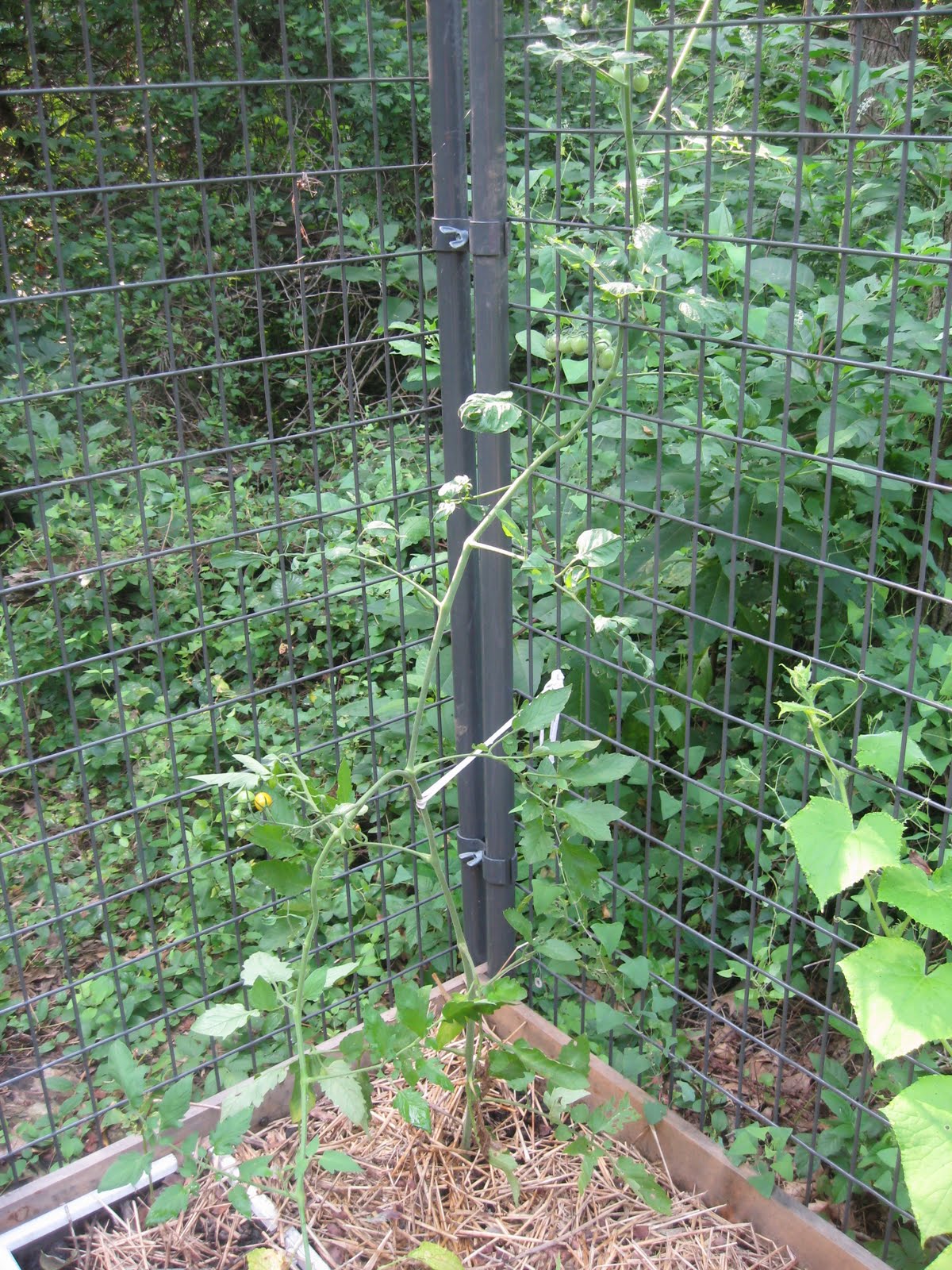
So, in theory, next year my bed will be fabulous. This year, I was quite hosed. I added nitrogen, but this is a losing battle. The tomato plants responded by shooting up in height - skinny as a rail, but tall - and producing very limited flowers. My tiny tomatoes have produced a handful each, but the heirloom varieties haven't bloomed. Several plants never grew past a foot in height. This leaves me to buy from the market. Tomatoes are an expensive fruit, maybe the most expensive at the rate we can eat them. We'll easily devour a huge Brandywine - sliced and drizzled with olive oil, sprinkled with salt and pepper.
this tomato plant is so sadly skinny you can't tell it's 4' tall

I've learnt though that cucumbers are less picky about their environment. In the past, I've successfully grown two cucumbers. Really. Two. But this year, the plants have done very well, or at least, in my perspective, very well. I have three varieties growing - two slicing and one pickling variety - and I've harvested over a dozen. Small cukes cover the vines and they seem to grow at a tremendous rate. The one thing I have found is that they can easily hide in the vegetation, so it's almost like a treasure hunt trying to find them. So, I'm looking at their success as a great step forward.
the cucumbers have been romping

And, even though my veggies haven't been super successful, my flower beds this year are unbelievable. June was a particularly beautiful month, and the Fall bloomers are all setting themselves up for a great show. I have Japanese irises whose greens this year exceed 5', something I've never seen. And my English style, a.k.a. let the plants and the "weeds" fight it out themselves, has given off a crazy array of color. It's always hard to photo the garden, I think, because there always seems to be a lighting issue of some kind, but I've put a bunch of the plant photos on Picasa. The hydrangeas (I have more than 25 bushes) have almost all bloomed and are now changed to their deeper colors. I'm going to add some photos of them and the late bloomers as I can.

If you want to check them out, here they are:  My Garden Photos

On an unrelated note, I have successfully convinced all of my neighbors to move their trash and recycling off of the storm drain. For fourteen years, our trash and recycling collection has been on this concrete pad at the bottom of the driveway. Inevitably every few weeks, trash would litter the entire area for one reason or another. That was bad enough, but one day a few years ago I actually looked at where we put things for collection. I mean, of course, I know where we put stuff, but I never saw that it was the storm drain leading directly into the Patapsco River. Of course, then I immediately noticed that the garbage didn't just litter the common property but tons of bottles and other trash would fall into the drain. There is no filter of any kind between the street and the river. I guess that's so it won't back up.  This spring, I was able to organize our neighbors into a clean up, and they pulled some 13 garbage containers full of trash out of the stream. Perfect timing to propose we move the pick up. Only one neighbor resisted, but now several weeks later our road is no longer polluting that stream on mass. Yay!